Field insights
Meet Bud. He means well.
But small construction shortcuts can create major comfort, compliance, indoor-air-quality, and scheduling problems. Bud’s Building Blunders highlights real field conditions, while Tacoma Energy explains what went wrong, why it matters, and how project teams can correct and prevent it.
Bud creates the lesson. Tacoma Energy provides the solution.

From the field
Bud’s blunders—and the details that prevent them
Each example separates the field mistake from its performance impact and the practical correction Tacoma Energy recommends.
Bud’s blunder vs. correct execution
Insulation quality is more than an R-value on paper
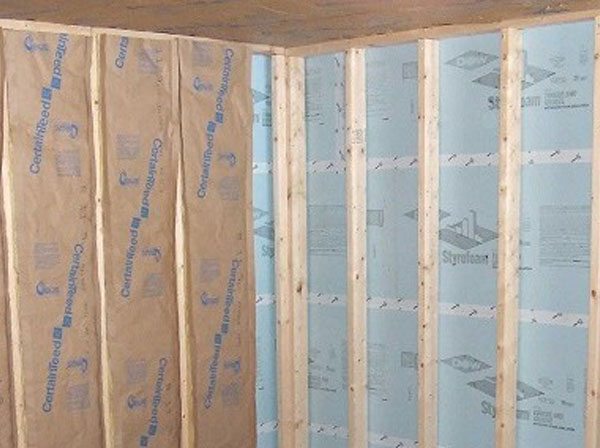
Consistent cavity coverage
Insulation is installed to fill the available cavity with minimal gaps, voids, or compression. Consistent installation helps the assembly perform closer to the modeled design.
Field takeaway: uniform coverage supports predictable thermal performance.
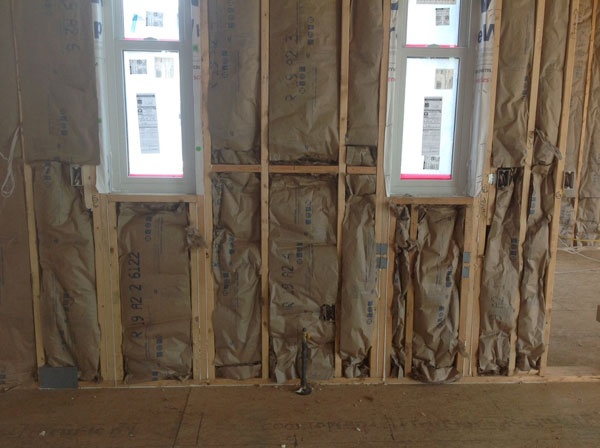
Gaps, voids, and compression
Missing and compressed insulation creates inconsistent thermal resistance and allows more heat flow through the assembly. The result can be comfort complaints, additional energy use, and avoidable corrective work.
Field takeaway: correct installation quality before the wall is closed.
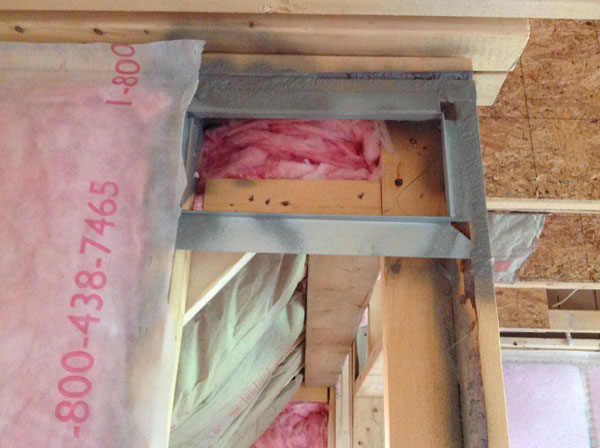
Exposed materials inside the return-air path
An unsealed return-air pathway can draw air, dust, fibers, and contaminants from surrounding framing cavities into the HVAC system instead of pulling only from the intended conditioned space.
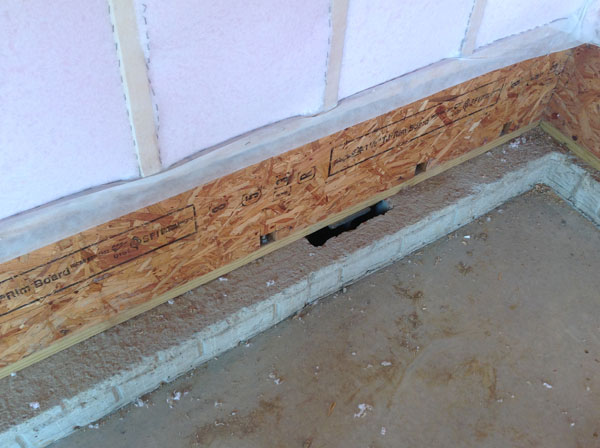
Open gap at the foundation and framing transition
A visible opening at this transition creates a direct air-leakage path between the home and adjacent unconditioned space. These gaps can be easy to miss once finishes and insulation are installed.
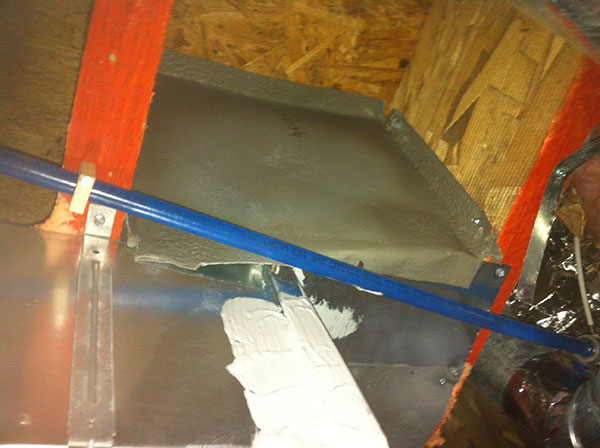
A patch is not the same as a continuous air seal
Repairs made after surrounding work is complete are often harder to access and easier to leave incomplete. A surface patch may look substantial while still leaving gaps around the penetration or along material transitions.
Build performance into the process
Catch field risks before they become closeout problems.
Tacoma Energy coordinates modeling, inspections, testing, and field support so project teams can address performance details while they are still practical to correct.